Is your child truly ready to stay home without supervision? This question sparks anxiety for countless parents navigating the transition toward independence. While laws vary widely, the answer often depends on more than just a number.
No federal law in the U.S. sets a minimum age for leaving minors unsupervised. States like Maryland suggest children under 8 shouldn’t be alone, while Oregon prohibits leaving kids under 10 unattended in risky situations. Most regions, however, leave this decision to caregivers—emphasizing maturity over birthdays.
Family therapist Sheryl Ziegler notes that readiness involves practical skills: Can the child handle emergencies? Do they follow safety rules? Factors like emotional resilience, access to trusted adults, and familiarity with routines also matter. Even a responsible 12-year-old might struggle if unprepared for unexpected scenarios.
This article explores state-specific guidelines, expert recommendations, and actionable checklists to help parents make informed choices. Balancing legal nuances with real-world preparedness ensures families prioritize safety while fostering confidence.
Key Takeaways
- No national age minimum exists in the U.S.; guidelines differ by state.
- Maryland advises against leaving children under 8 unsupervised.
- Experts like Sheryl Ziegler stress maturity and problem-solving skills over age.
- Assess comfort with emergencies, access to support, and household safety.
- Practical checklists help evaluate readiness for incremental independence.
Understanding the Decision to Leave a Child Home Alone
The absence of federal regulations places this choice firmly in caregivers’ hands. While some states offer safety suggestions, most emphasize parental discretion over rigid law. This flexibility requires families to weigh maturity, neighborhood security, and emergency preparedness.
The Role of Parental Discretion
Parents carry unique responsibility when determining supervision needs. The American Academy of Pediatrics notes that readiness depends on problem-solving abilities and comfort during crises. For example, a 9-year-old might follow rules flawlessly but panic if a stranger knocks.
Balancing Independence and Supervision
Gradual independence builds confidence without compromising safety. Start with 30-minute trial runs while nearby. Ensure access to emergency contacts and rehearse scenarios like power outages. Therapist Sheryl Ziegler advises: “Frame guidelines collaboratively—kids respect rules they help create.”
State law variations further complicate decisions. Illinois has no minimum age, while Delaware discourages leaving kids under 12 unsupervised. This patchwork system underscores why parents must prioritize situational awareness over generic benchmarks.
Evaluating Your Child’s Maturity and Readiness
Determining readiness for solo time involves more than counting birthdays—it’s about observing real-world capabilities. Experts like Dr. Barbara Cutillo stress that maturity level trumps numerical child age when making this decision. Caregivers must assess both practical skills and emotional stability.
Emotional and Cognitive Preparedness
A child who stays calm during mock emergencies—like power outages—shows crucial emotional resilience. Dr. Linda Feeney notes that kids with anxiety or ADHD often need extra support. Can they manage fear without adult intervention? This indicates their capacity to handle responsibility.
Assessing Self-Sufficiency Skills
Practical tests reveal true readiness. Start with 10-minute trial runs while you’re nearby. Does your youngster remember safety care routines? Can they prepare a snack or lock doors properly? Therapist Sheryl Ziegler recommends role-playing scenarios like unexpected visitors to gauge problem-solving abilities.
Emergency response skills are non-negotiable. Ensure they know how to call 911, administer basic first aid, and articulate their address. Regular drills build confidence while exposing gaps in maturity. As Dr. Cutillo advises: “Involve kids in creating house rules—their input reveals comprehension and commitment.”
Key Safety Considerations and Home Environment Setup
Creating a safe environment requires more than locked doors—it demands strategic planning. Focus on minimizing risks while maintaining comfort. Start by identifying potential hazards and establishing fail-safes for unexpected situations.
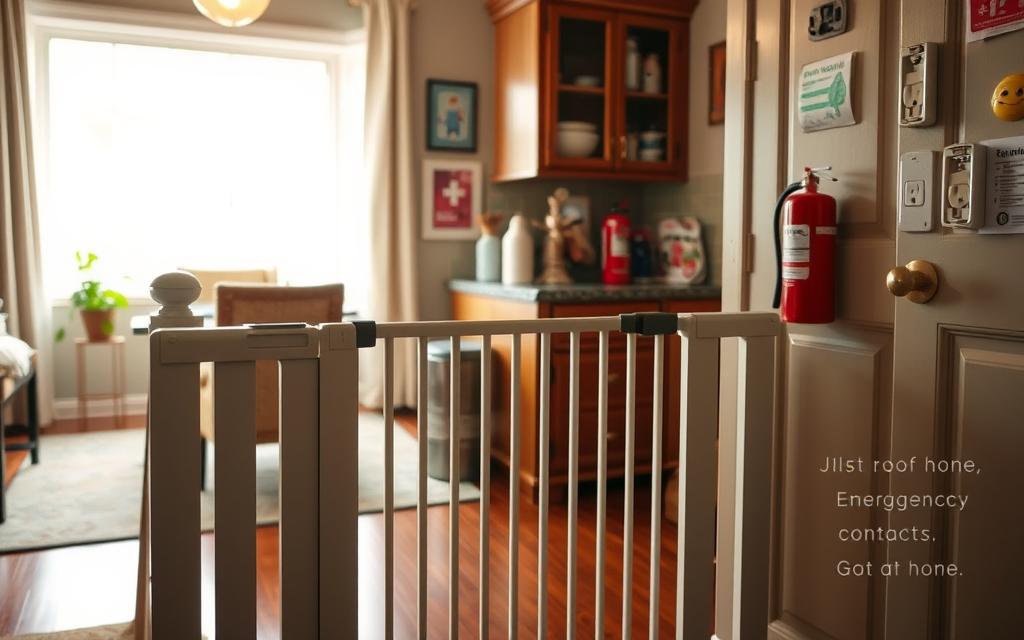
Childproofing and Emergency Contacts
Secure cabinets containing cleaners or medications with childproof locks. Anchor heavy furniture to walls to prevent tipping. Keep sharp tools in locked drawers and cover unused outlets. These steps reduce accidents when supervision isn’t immediate.
Compile emergency contacts on a brightly colored chart near the phone. Include trusted neighbors, relatives, and local services like poison control. Update numbers quarterly and practice dialing 911 using a disconnected device. Role-play scenarios where they must explain their address clearly.
Establishing a Secure Space
Designate a primary area where kids can engage in activities safely—like a living room with visibility from outside. Equip this zone with a landline, flashlight, and first-aid kit. Use door alarms or smart sensors to monitor entries without constant checks.
For added security, involve professional home safety inspectors. They’ll spot overlooked risks like loose railings or outdated smoke detectors. Pair these measures with scheduled check-ins via video calls to balance independence with oversight.
Legal Considerations: at what age can you leave a child home alone – State Guidelines
America’s patchwork of state laws creates confusion for families navigating supervision rules. While no federal mandate exists, local regulations range from strict age cutoffs to open-ended guidelines. Understanding these differences helps avoid legal risks while respecting regional standards.
State-by-State Regulations
Minimum specific age requirements vary dramatically across jurisdictions. Illinois permits minors aged 14+ to stay without supervision, while Maryland prohibits leaving those under 8 unattended. Oregon takes a risk-based approach—children under 10 can’t be left home alone in hazardous conditions.
| State | Minimum Age | Key Details |
|---|---|---|
| Illinois | 14 | Defines neglect for those under 14 unsupervised |
| Maryland | 8 | Requires supervision under age 8 |
| Oregon | 10 | Prohibits risky unsupervised situations |
| Colorado | 12 | Recommends 12+ for solo time |
| Texas | None | Neglect charges based on circumstances |
Exceptions and Parental Discretion
Many state systems allow flexibility. Indiana and Washington lack fixed age limits but emphasize maturity assessments. Texas considers factors like emergency readiness when evaluating neglect claims under Family Code §261.001(4).
Legal consequences arise when supervision gaps endanger minors. Colorado’s suggestions become critical evidence in custody disputes. Always verify information through local child welfare agencies—rules change frequently.
Courts often weigh parental judgment against community standards. A Maryland parent might face charges for leaving a mature 7-year-old briefly, while Oregon focuses on environmental dangers. Regular updates from official state portals ensure compliance with evolving laws.
Assessing Risks and Preparing an Emergency Plan
Effective emergency planning transforms potential crises into manageable situations. Start by evaluating how time alone impacts safety—shorter durations often pose fewer risks than full-day gaps. Consider environmental factors like neighborhood crime rates or unreliable power sources that could escalate emergencies.

Developing a Response Strategy
Create clear protocols for fires, medical issues, or intruders. Use role-playing exercises to test reactions—for example, ask kids to demonstrate dialing 911 while stating their address. Nearly 4.5 million children sustain injuries at home annually, making first-aid knowledge essential.
Implement tech tools like parental control apps with GPS tracking and scheduled video check-ins. A midday call reinforces routines without micromanaging. The National SAFE KIDS Campaign advises keeping emergency numbers near all phones using color-coded charts.
Communicating with Neighbors and Support Networks
Identify two trusted adults who can respond within minutes if needed. Share house keys and Wi-Fi passwords only with vetted contacts. Establish code words for verifying unexpected visitors—this prevents scams targeting unsupervised minors.
Local child welfare agencies offer free guidance tailored to regional risks. Delaware’s Division of Family Services, for instance, provides printable safety checklists addressing common case scenarios. Update these resources quarterly as family needs evolve.
Always leave non-perishable snacks and bottled water accessible. Pair these preparations with contingency plans—like automated text alerts to neighbors if check-in calls are missed. Proactive measures build confidence while addressing the unpredictable nature of solo time.
Expert Tips and Safety Guidelines for Leaving Your Child Unattended
Establishing a safe framework for solo time requires more than good intentions—it demands actionable strategies. Professionals emphasize structured routines and visible protocols to balance independence with security.

Setting Clear Boundaries and Rules
Experts at iMOM recommend written agreements outlining non-negotiable rules. Locked doors, restricted appliance use, and a “no visitors” policy often top the list. Role-play scenarios like fire drills or unexpected calls to cement these expectations.
Display emergency contacts prominently using color-coded charts. Include trusted neighbors, poison control, and local emergency services. Practice reciting addresses during mock 911 calls—nearly 30% of kids struggle with this under stress.
Integrating Routine Safety Checks
Daily walkthroughs ensure hazards like unlocked windows or uncharged devices get addressed. Use checklists to verify medication storage and appliance safety. Surprise “pop quizzes” about house rules keep protocols fresh in young minds.
Schedule midday check-ins via video calls for reassurance without hovering. Therapist-approved phrases like “What would you do if…” spark problem-solving discussions. Pair these talks with rewards for demonstrated responsibility to reinforce positive behavior.
Tools and Resources: Checklists, Guidelines, and Support
Practical tools transform safety planning from overwhelming to manageable. Trusted organizations offer structured materials to streamline preparedness while addressing critical risks. These resources help caregivers systematically address gaps in supervision plans.
Printable Safety Checklists and Guides
Curated checklists ensure no detail gets overlooked. The American Red Cross provides step-by-step guides covering fire safety and emergency protocols. iMOM’s character grid links responsibility traits to real-world scenarios—like handling strangers or power outages.
Top resources include:
- Healthy Children Checklist: Age-specific tasks for building independence
- Home Safety Audit Templates: Identify hazards like unsecured cleaners
- 911 Script Cards: Practice clear communication during crises
Caregivers should involve trusted adults when reviewing materials. Schedule quarterly reviews to match evolving skill levels. For high-risk homes, pair checklists with professional inspections addressing scald risks or pest-related diseases.
Digital tools add another level of security. Apps like Red Cross First Aid send weather alerts and track emergency contacts. Print physical copies as backups—only 62% of teens recall safety plans under stress.
Regular audits using these resources create accountability. Adjust plans based on incident numbers in your area. A neighborhood with frequent outages demands different prep than one with wildfire risks.
Recognizing Signs of Neglect and Inadequate Supervision
Nearly 650,000 U.S. children experience neglect annually, often linked to supervision gaps. Legal systems define neglect as failing to meet basic needs—including safety and protection from harm. Understanding thresholds helps families avoid unintentional risks while promoting independence.
Understanding Neglect Laws
Minnesota law classifies leaving children under 7 unsupervised for any period as potential neglect. Maryland prosecutes caregivers who leave minors under 8 without supervision, while Texas considers factors like emergency readiness. Courts often assess the duration and environmental risks when evaluating cases.
Federal guidelines allow flexibility but emphasize developmental appropriateness. The DHS Child Maltreatment Screening Guidelines flag extended unsupervised periods: 3+ hours for 8-10-year-olds, 12+ hours for preteens. These benchmarks help identify risky situations before they escalate.
Indicators That It’s Time to Reevaluate Supervision
Behavioral changes signal distress. A once-confident 11-year-old might withdraw after repeated solo evenings. Physical signs—like unwashed clothes or missed meals—also warrant concern. Therapist Sheryl Ziegler notes: “Frequent rule-breaking often masks anxiety about being unsupervised.”
Reassess plans if children struggle with basic tasks outlined in state guidelines. Colorado’s maturity checklist helps spot gaps in problem-solving skills. Consult county social services if meltdowns or school performance drops coincide with increased alone periods.
Update arrangements quarterly, especially after moves or schedule changes. Proactive adjustments prevent legal issues while ensuring kids feel secure during transitional phases.
Conclusion
Deciding when minors can manage solo time hinges on more than legal checklists—it’s a deeply personal family choice. State guidelines offer frameworks, but parent intuition remains vital. Factors like emergency readiness, neighborhood safety, and emotional resilience shape each unique situation.
While some regions specify minimum ages for being left home unsupervised, most prioritize maturity over numbers. Experts stress practical skills: Can the child home lock doors properly? Will they follow fire escape plans? These competencies matter more than arbitrary age thresholds.
Successful transitions rely on preparation. Use checklists to evaluate first-aid knowledge and trial runs to build confidence. Update safety protocols as children home environments evolve—new schools or busier streets demand revised strategies.
Ultimately, the safest place for solo time emerges from tailored planning. Trusted neighbors, rehearsed emergencies, and open communication create security nets. There’s no universal formula, but proactive parent decisions paired with community resources foster independence responsibly.