About 75% of people facing debt collection lawsuits don’t answer. This often leads to a default judgment against them. It’s key to know the debt collection legal process to get back what’s owed.
Suing for unpaid debt needs careful steps. It helps you deal with the legal world. Whether it’s a personal loan, business deal, or credit card debt, suing can protect your money.
The first step is to document everything well. You also need to know your rights. Small claims court is a good place to start for debts up to $25,000. It’s a clear way for creditors to get justice.
Key Takeaways
- Understand the legal process for debt collection
- Gather complete documentation of the unpaid debt
- Know the statute of limitations in your state
- Consider small claims court for amounts under $25,000
- Prepare evidence to support your legal claim
- Be aware of consumer protection laws
- Consider professional legal guidance
Understanding Unpaid Debt
Many Americans face a big financial problem with unpaid debt. Almost 9% of people who use credit cards are late on payments. This shows how common the problem is. When debts are not paid for a long time, a lawsuit might start.
The process of dealing with debt lawsuits has important steps. People need to know these before facing legal trouble. Creditors usually start looking for ways to get paid back after 90 days of no payment.
What Constitutes Unpaid Debt?
Unpaid debt can happen in many ways. It includes:
- Credit card balances that are too high
- Personal loans with missed payments
- Medical bills not paid
- Utility bills not paid
- Rental payments that are late
Common Types of Unpaid Debt
There are different kinds of debt that can lead to lawsuits. Knowing these can help people see the risks:
- Consumer Debt: This includes credit cards and personal loans.
- Medical Debt: This is for hospital and healthcare bills.
- Contractual Debt: This is for broken agreements and service contracts.
- Utility Debt: This is for unpaid bills for things like electricity and water.
A 2023 study found that 90% of people sued for debt didn’t answer their summons. This shows why it’s key to know your legal options and act fast if you’re sued.
When You Should Consider Suing
Dealing with unpaid debt can be tough for creditors. It’s key to know when to go to court. This helps protect your rights and get fair pay.
Thinking about suing needs careful thought. It’s not easy because it takes time and money. You also need a good plan.
Signs Legal Action May Be Necessary
- Repeated failed attempts to collect the debt
- Debtor refuses to communicate or negotiate
- Amount owed is substantial and exceeds small claims thresholds
- Debt is approaching the statute of limitations
Assessing the Amount Owed
Before going to court, check the total debt. You need to add up:
- Original principal amount
- Accumulated interest
- Late payment fees
- Potential legal costs
| Debt Type | Typical Small Claims Limit | Recommended Action |
|---|---|---|
| Consumer Debt | $10,000 | Consider small claims court |
| Business Debt | $12,500 | Evaluate civil court options |
| Personal Loans | $6,250 | Assess cost-effectiveness of lawsuit |
Pro tip: Always document all communication attempts and gather complete evidence before suing.
About 30% of Americans have debt in collections. This shows why knowing your rights and legal ways to get back money is so important.
Legal Grounds for Suing
To start debt recovery, you need to know the law. Creditors have ways to get money back when you don’t pay.
There are two main ways to enforce debt: breach of contract and promissory notes. These methods help creditors get money back through court.
Breach of Contract
A breach of contract happens when someone doesn’t pay as agreed. To prove this, you need:
- A clear, written agreement
- Proof that the terms were not met
- Proof of how much money was lost
Promissory Notes
Promissory notes are written promises to pay money back. They are strong evidence for a lawsuit if you don’t pay.
| Legal Ground | Statute of Limitations | Typical Action |
|---|---|---|
| Breach of Contract | 4-6 years in Texas | Sue for total contract amount |
| Promissory Notes | 4 years in Texas | Demand full note value |
Creditors must keep good records when suing. Good records help win a debt recovery lawsuit.
The Importance of Documentation
Getting ready for a court case about debt means you need to document everything well. You must gather and organize your evidence carefully. The success of your case depends on how good your documents are.
Good documents are key to winning your case. Creditors need to gather all the evidence they can to prove their case.
Types of Documentation to Gather
When you might go to court for debt, you need to get these important documents:
- Original signed contract or agreement
- Detailed payment history records
- Communication logs with the debtor
- Email and text message exchanges
- Invoices and billing statements
- Promissory notes
How to Organize Your Evidence
Organizing your documents well is very important for your court case. Here’s how to do it:
| Document Type | Recommended Organization Method | Retention Period |
|---|---|---|
| Contracts | Chronological order | 7-10 years |
| Payment Records | Dated spreadsheet | 7 years |
| Communication Logs | Threaded conversations | 5-7 years |
Being precise with your documents is very important. Digital and physical copies should be maintained with equal care. Judges only look at the evidence you present. So, making sure your documents are complete is key to your case.
Attempting Resolution Before Suing
Before you go to court for unpaid debt, try other ways first. These can save you money and keep things friendly. About 70% of problems can be fixed by talking it out before going to court.
Sending a Demand Letter
A demand letter is your first big step in getting paid back. It works about 50-70% of the time, helping you avoid expensive lawsuits. When you write this letter, remember a few important things:
- Clearly state the total amount owed
- Provide a specific timeline for payment (typically 10-30 days)
- Include detailed documentation of the debt
- Outline possible actions if you don’t get paid
Mediation and Arbitration Options
If talking directly doesn’t work, mediation or arbitration can help. These options are good because they:
- Cost less than going to court
- Get things settled faster
- Help keep things friendly
- Offer more flexible solutions
Working with a collection agency can also help. They are experts at finding debtors and getting them to pay. This can make it more likely you’ll get your money back.
Pro tip: Always keep records of all talks and save copies of letters. This helps protect your rights.
Choosing the Right Court
Finding the right court for unpaid bills is key. You need to know the differences between courts. This helps you pick the best place for your debt relief needs.
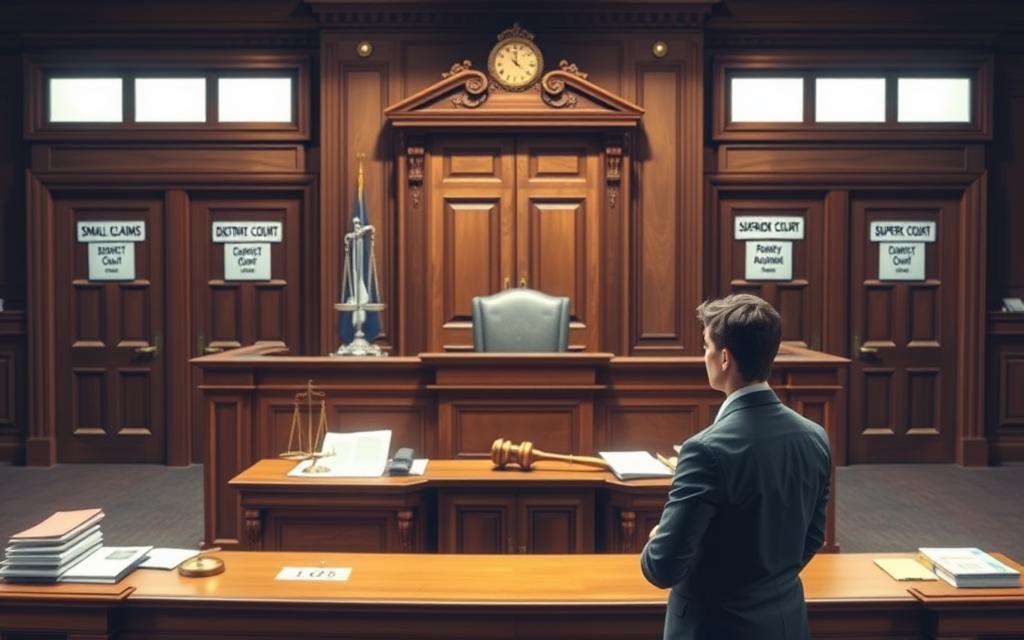
- Small Claims Court
- Civil Court
Small Claims Court: Ideal for Smaller Debt Amounts
Small claims courts are great for smaller debts. They have big benefits:
- Lower filing fees
- Simplified procedures
- Faster resolution process
Jurisdiction and Venue Considerations
Finding the right court is about the amount owed and where you are. Jurisdiction tells you which court can hear your case. Venue is where you file your lawsuit.
| Court Type | Typical Debt Amount | Filing Complexity |
|---|---|---|
| Small Claims Court | Up to $5,000-$10,000 | Low |
| Civil Court | Over $10,000 | High |
Knowing these details helps you choose the right path for your unpaid bills. Look up your state’s rules. They change in different places.
Filing Your Lawsuit
Going through the small claims process can be tough. It’s important to know how to file a lawsuit. This helps solve unpaid debt problems.
To file a lawsuit, you need some important tips. Each place has its own rules for filing claims.
Understanding Court Rules
Court rules change from place to place. But, some steps are the same everywhere. In Texas, for example, justice courts handle debt cases with clear rules:
- Small claims cases can’t be over $20,000
- People usually go to court by themselves
- Companies can be represented by their owners or workers
Completing Necessary Paperwork
Having the right documents is key in a debt dispute. Texas has an online system (eFileTexas.gov) to help with forms.
- Find the right court
- Make a detailed complaint
- Pay the court fees
When picking a place for your lawsuit, think about these:
- Where the defendant lives
- Where the problem happened
- Where the deal was supposed to happen
Pro tip: Check all your documents carefully. Make sure they’re right to avoid your case being thrown out.
Serving the Defendant
When you try to get back money owed, serving legal papers is key. How you serve the defendant can make or break your case.
Legal service means telling the defendant about the lawsuit. There are a few ways to do this:
- Certified mail with return receipt
- Personal delivery by a professional process server
- Sheriff’s office service
- Court-authorized individual over 18 years old
Selecting the Right Service Method
Choosing the right way to serve depends on many things. Rule 501.2(a) gives rules for serving papers. Personal delivery is usually the best, making sure the defendant gets the notice.
Documenting Proper Service
After serving, you must file a “Return of Service” with the court. This proves the defendant was told about the lawsuit. It’s key for moving your case forward.
Alternative Service Options
If standard ways don’t work, courts might let you use other methods. These include:
- First-class mail with residential delivery
- Service by publication in local newspapers
- Online notification through court websites
Defendants usually have 14-20 days to answer, based on the court. Good service helps your case move smoothly.
Preparing for Court
Going to court for debt needs careful planning. Creditors must gather strong evidence and make clear legal points. This helps a lot in winning the case.
Gathering Critical Evidence
Good evidence is key for winning. You need to collect and sort out important documents. These include:
- Original loan or credit agreements
- Payment records and communication history
- Detailed financial statements
- Proof of attempted debt collection
- Correspondence with the debtor
Identifying and Preparing Witnesses
Witnesses can help a lot in court. Think about including:
- Financial records managers
- Loan officers who know the agreement
- Collection reps who tried to contact the debtor
Developing Persuasive Arguments
Your arguments must be clear and strong. Make a timeline of the debt. Show how the debtor didn’t pay as promised. Think about what the other side might say and have answers ready.
Being well-prepared is important. Courts like cases that are ready. About 40-60% of debts are settled before trial. Good preparation can help you win back your money.
Representing Yourself in Court
Going through the debt lawsuit process can be tough, even if you’re doing it yourself. Many creditors choose to do this to save money and keep control over their creditor rights.

Pros and Cons of Self-Representation
It’s important to know the good and bad sides of doing it yourself in a debt collection case.
- Pros:
- Lower legal costs
- Direct control of the case
- Personal understanding of the dispute
- Cons:
- Limited legal expertise
- Complex legal procedures
- Potential strategic disadvantages
Tips for Court Appearance
Looking good and knowing the rules are key when you’re in small claims court.
- Dress formally and conservatively
- Bring all necessary documentation
- Speak clearly and concisely
- Remain calm and respectful
- Organize evidence systematically
Most debt cases can’t ask for more than $20,000, not counting interest and court costs. Filing fees are usually around $54, with extra fees for service. Knowing these facts can help you do better in small claims court.
Understanding Court Procedures
Going to court for a debt dispute can be tough. Knowing the court procedures helps you feel ready and confident.
In the courtroom, several important steps happen during the hearing. The court is a place where financial disputes are solved.
What Happens During a Hearing
Here’s what usually happens in a debt dispute hearing:
- Opening statements by both sides
- Showing of evidence
- Witnesses give their stories
- The judge asks questions
- Final arguments are made
The judge looks at all the evidence and arguments. They decide the court’s judgment. About 70% of the time, the creditor wins.
Post-Trial Procedures
After the hearing, there are a few possible results:
- Judgment for the creditor
- Judgment for the debtor
- Partial judgment
- Case dismissed
If a judgment is made, the court will say how to pay or collect the debt.
| Scenario | Typical Outcome |
|---|---|
| Creditor Wins | Full debt repayment required |
| Debtor Wins | Debt might be reduced or gone |
| Partial Judgment | Negotiated payment plan |
Remember, good preparation and documents can help you win in court.
Possible Outcomes of Your Case
Going to court for an unpaid bill can be tricky. There are many possible results that can change how you deal with debt. Knowing these outcomes helps you get ready for different situations when you sue for money.
When you take legal action for unpaid debt, you might see a few possible results:
Winning the Case
A win in court can lead to good things:
- Full judgment for the whole debt amount
- Partial judgment for a part of the debt
- A court-ordered payment plan
- Legal okay to take money from your wages
About 33% of people who go to court for debt win their cases. Winning means the court says the debt is real and you have to pay.
Losing the Case
Not every lawsuit ends in a win. If you lose, you might face:
- No way to get the debt back
- Having to pay the other side’s legal fees
- The chance to appeal
- Damage to your credit score
Studies show about 70% of the time, creditors win if they can prove the debt. Having the right documents is key to winning.
Knowing what might happen helps you decide if you should go to court for unpaid debts. Talking to a lawyer can give you advice that fits your case.
Collecting the Judgement
Winning a debt lawsuit is just the start. Getting the money owed needs smart planning and hard work. The court’s ruling lets you go after the debt. But getting the money paid back takes careful steps.
After getting a court judgment, you have many ways to get the debt paid:
- Wage Garnishment
- Property Liens
- Bank Account Levies
- Asset Seizure
Wage Garnishment Strategies
Wage garnishment lets you take a part of the debtor’s income. Most places let you take up to 25% of what’s left after taxes. The cost to start garnishment changes by where you are.
Property and Asset Collection Methods
Putting a lien on the debtor’s property means you have a claim on it. This way, you can get your money back when the property is sold. It’s a strong way to get your money back through legal debt recovery.
| Collection Method | Effectiveness | Average Recovery Rate |
|---|---|---|
| Wage Garnishment | High | 60-75% |
| Property Liens | Medium | 40-55% |
| Bank Account Levies | Variable | 30-50% |
Negotiating Payment Plans
At times, making a payment plan can work better than trying hard to collect. This way, you might keep a good relationship with the debtor. And you’ll get your money bit by bit.
Remember, each state has its own rules for collecting debts. Always check the local laws to make sure you’re following them when you collect your judgment.
Alternatives to Lawsuits
When you owe money, suing isn’t always the best choice. Looking at other ways can save time and money. You might also keep your relationships strong. Two good options are using a collection agency and learning about bankruptcy.
Debt Collection Agencies: A Strategic Approach
A collection agency is a smart way to get your money back. These firms use special skills to talk to debtors and try to get your money. They are good at negotiating.
- Typically charge 25-50% of recovered amount
- Specialize in tracing and contacting debtors
- Use multiple communication channels
- Provide documented recovery attempts
Bankruptcy: Understanding Your Options
Bankruptcy can help if you’re really struggling with debt. It gives you a clear plan to deal with your money problems. There are different types of bankruptcy, each with its own benefits.
| Bankruptcy Type | Key Features | Debt Relief Potentia |
|---|---|---|
| Chapter 7 | Liquidation of non-exempt assets | Complete discharge of unsecured debts |
| Chapter 13 | Restructured payment plan | Protect assets while repaying debts |
Bankruptcy can really help with debt, but it affects your credit for a long time. Talking to a financial expert can help you choose the best option for you.
Legal Resources and Assistance
Dealing with debt law needs smart help. You can get legal aid from lawyers and community groups. Free talks with lawyers usually last 30 to 60 minutes. This lets you talk about your debt without spending money right away.
Getting advice on debt claims is key. Many people get help from Legal Services Corporation. They offer low-cost or free help. This helps you know your rights and find ways to handle debt.
Look for local law firms that know about debt cases. Some lawyers have fees that change or payment plans. Online clinics and court sites also have helpful info for those in financial trouble.
Getting legal help early can stop wage garnishment and protect your stuff. Knowing your rights and using resources is important. Think about talking to legal aid or pro bono lawyers. They can help you make a plan for your debt.